
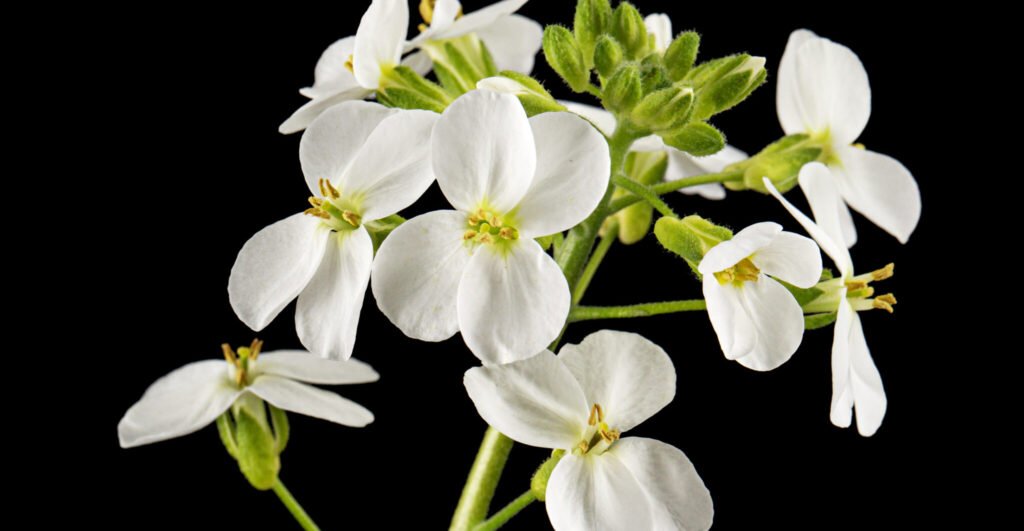
Summary of Seed Priming With Protein Hydrolysates Improves Arabidopsis Growth and Stress Tolerance to Abiotic Stresses
Biostimulant Arabidopsis Growth and Sustainable Plant Stress Management
Biostimulant Arabidopsis Growth studies are essential for developing innovative and sustainable agricultural solutions. Plant biostimulants support environmentally friendly farming by improving plant performance while reducing dependence on chemical inputs. In particular, protein hydrolysate-based products have attracted growing attention because they enhance growth and help plants cope with abiotic stress. Nevertheless, researchers still lack a clear understanding of how plants perceive these compounds and which metabolic pathways they activate.
Experimental Evaluation of Protein Hydrolysates in Arabidopsis
To address these knowledge gaps, researchers combined high-throughput phenotyping with untargeted metabolomics. They cultivated Arabidopsis plants under optimal conditions as well as increasing salt stress levels (0, 75, and 150 mM NaCl). In parallel, they applied eleven protein hydrolysates from different protein sources as seed priming agents at three concentrations.
Throughout the growth cycle, the study monitored key traits such as early seedling establishment, biomass accumulation, photosynthetic efficiency, and stress tolerance. As a result, this dynamic screening approach provided a detailed overview of how different products influenced plant development under both control and stress conditions.
Functional Classification of Biostimulant Activity
To better compare product performance, the researchers introduced a Plant Biostimulant Characterization (PBC) index. This index integrates growth promotion and stress mitigation responses into a single value. Consequently, it allowed clear differentiation between growth promoters, inhibitors, and stress alleviators.
Among the eleven tested products, two protein hydrolysates consistently showed strong positive effects. Specifically, they maintained PBC index values above 0.51 across all treatments. Therefore, these products emerged as the most effective candidates for improving plant performance under saline stress.
Metabolic Responses Associated With Improved Growth
In addition, untargeted metabolomics revealed important metabolic changes in plants treated with the most effective hydrolysates. These plants accumulated lower levels of stress-related metabolites, including flavonoids and terpenoids. Moreover, they showed reduced levels of phytohormone degradation and conjugation products, such as those related to cytokinins, auxins, and gibberellins.
As a result, the plants experienced less stress-induced growth inhibition. This metabolic adjustment explains, at least in part, how protein hydrolysates support Biostimulant Arabidopsis Growth under challenging environmental conditions.
Conclusion
Overall, this research demonstrates that protein hydrolysate-based biostimulants can significantly enhance Arabidopsis growth and stress resilience. By combining phenotyping and metabolomics, the study provides valuable insights into biostimulant modes of action. Consequently, these findings contribute to the development of more sustainable and effective strategies for crop stress management.
Publication: Frontiers in Plant Science