
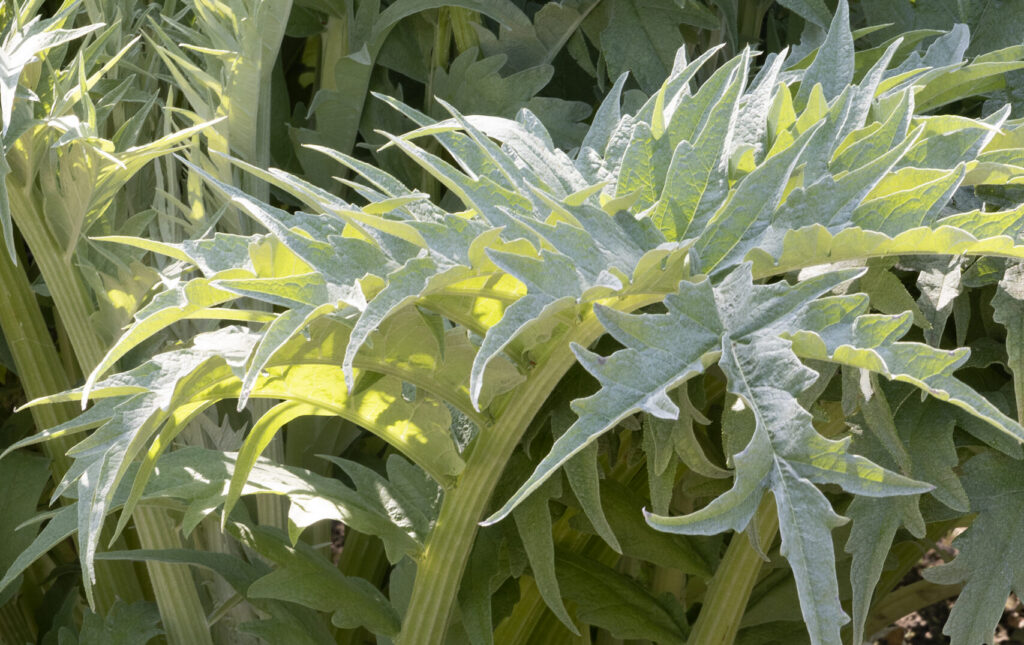
Summary of Differential Effects of a Legume-Derived Protein Hydrolysate and Seaweed Extract on Yield and Leaf Quality of Cardoon Grown in a Floating System
Biostimulant Effects on Cardoon in Soilless Systems
Biostimulant Effects on Cardoon are gaining attention as eco-friendly strategies to enhance crop growth and quality in soilless cultivation. Cardoon is valued for biomass production and bioactive compounds, yet optimizing its performance under controlled systems remains challenging. Natural biostimulants such as seaweed extracts (SW) and protein hydrolysates (PH) offer promising tools to improve growth, nutrient uptake, and phytochemical content.
This study investigates how these biostimulants affect cardoon growth, biomass, mineral composition, and metabolic traits in a floating system.
Biostimulant Effects on Cardoon Growth and Biomass
Soilless cultivation can limit nutrient efficiency and plant performance. Biostimulant application significantly enhanced cardoon growth. Both PH and SW increased fresh and dry biomass compared with untreated plants. SW mainly promoted vegetative development and chlorophyll content, while PH enhanced nutraceutical traits such as total phenolic concentration and antioxidant activity. These results highlight clear biostimulant effects on cardoon productivity and quality.
Effects of Biostimulants on Mineral Composition
Mineral accumulation is critical for cardoon nutritional quality. Biostimulants influenced nutrient uptake differently. SW improved the accumulation of key minerals, supporting growth and chlorophyll synthesis. PH had a smaller effect on minerals but strongly boosted antioxidant-related compounds. These contrasting effects indicate that biostimulant type determines the primary metabolic and nutritional outcomes.
Biostimulant Effects on Cardoon Metabolism
Biostimulants also triggered metabolic reprogramming. PH increased phenolic content and antioxidant capacity, while SW enhanced vegetative metabolism and nutrient assimilation. Harvest timing further modulated these responses, with peak biomass at intermediate developmental stages and higher phenolic levels earlier in growth. Together, these findings reveal complementary modes of action, emphasizing targeted biostimulant management.
Implications for Sustainable Cardoon Production
Overall, this research confirms significant biostimulant effects on cardoon in soilless systems. SW and PH improved growth, nutrient balance, and phytochemical quality, while their distinct metabolic responses suggest potential synergistic strategies. Integrating carefully timed biostimulant applications can optimize both productivity and health-promoting compounds, supporting sustainable cardoon cultivation in controlled environments.
Publication: Horticulturae