
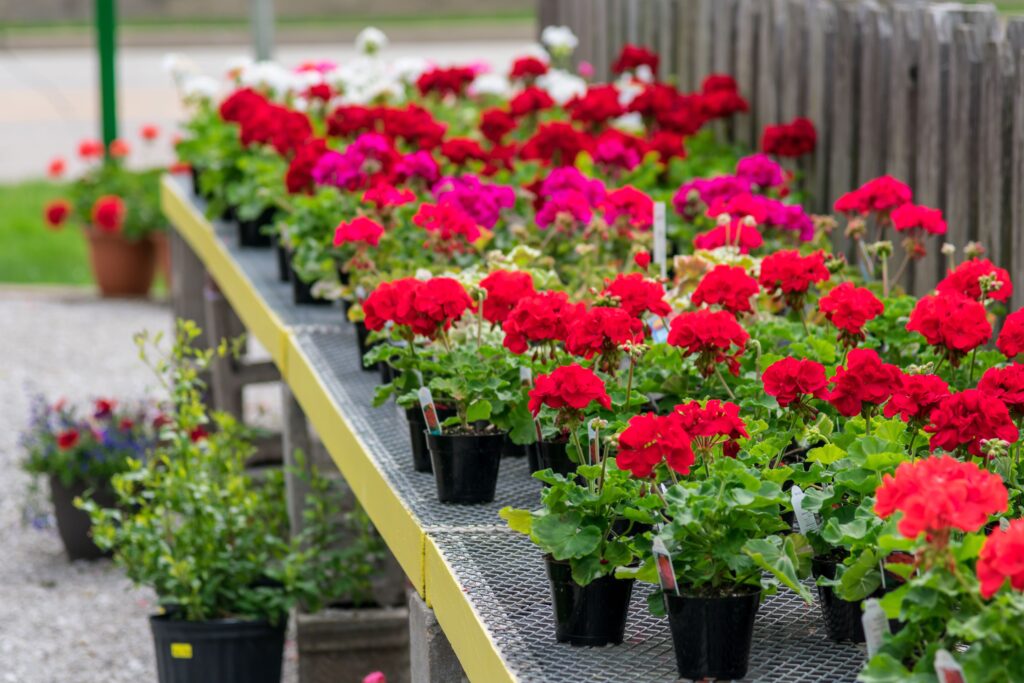
Summary of Effect of Compost Based Substrate and Mycorrhizal Inoculum in Potted Geranium Plants
Geranium Growth in Compost: A Sustainable Solution for Ornamental Plant Production
Geranium Growth in Compost is increasingly recognized as a sustainable approach in ornamental plant production. As peat-based substrates and synthetic fertilizers are discouraged in modern floriculture, the choice of substrate and fertilization method becomes crucial. Therefore, developing environmentally friendly growing systems is essential to maintain both plant quality and commercial value.
Geranium Growth in Compost supports sustainable floriculture by reducing dependence on peat, a non-renewable resource. High-quality compost improves substrate structure, increases nutrient availability, and stimulates beneficial microbial activity. Consequently, compost-based growing media represent an effective alternative for ornamental crops, as further discussed in our articles on sustainable growing substrates and eco-friendly horticultural practices.
To better understand Geranium Growth in Compost, geranium cuttings of Pelargonium zonale cv. Real Polaris and Pelargonium grandiflorum cv. Lotus were cultivated under greenhouse conditions for two months. During this period, peat was partially replaced with high-quality compost at rates of 20% and 40%. In addition, plants were fertilized with a natural mixture of guano and mycorrhizal inoculum, which is known to enhance nutrient uptake and root development. As a result, plant growth was supported without the use of synthetic chemical fertilizers, a topic also explored in our resources on mycorrhizal symbiosis in horticulture.
The results clearly showed that Geranium Growth in Compost was optimal when peat was reduced by 20%. In particular, Pelargonium zonale cv. Real Polaris grown in this substrate exhibited superior commercial traits, including improved vigor and visual quality. However, increasing compost content to 40% did not lead to additional benefits, highlighting the importance of balanced substrate composition.
In conclusion, Geranium Growth in Compost demonstrates that moderate peat substitution combined with natural fertilization can successfully meet the demands of sustainable floriculture. This approach offers a practical solution for growers seeking high-quality geranium production while minimizing environmental impact.
Publication: Journal of Life Sciences